Musculoskeletal ultrasound in pediatrics with assessment of the spinal cord and spine — training, 72 h | МЕДТРЕЙН Asia
Musculoskeletal ultrasound · Expert

Musculoskeletal ultrasound in pediatrics with assessment of the spinal cord and spine

Musculoskeletal ultrasound in pediatrics with assessment of the spinal cord and spine.

72academic hours
Expertlevel
Distance learningmode of study

Course curriculum

  • Block 1. Introduction to musculoskeletal ultrasound
  • Necessary equipment
  • Features of the structure of children's bone and cartilage
  • Relationship between the anatomical structure of formations and the ultrasound picture
  • Normal ultrasound picture of the musculoskeletal system tissues
  • Universal ultrasound signs in pathology of the skeleton, connective tissue structures, nerves and muscles: bone erosion, fracture, synovitis, enthesitis, tendinitis and tendinosis, ligament and tendon tear, muscle hematomas, myopathy, neuropraxia, axonotmesis, neurotmesis
  • Block 2. Review of the necessary aspects of the anatomy of large joints
  • Normal ultrasound anatomy of the shoulder joint, elbow joint, wrist joint, hip joint, knee and ankle joint in pediatric practice
  • Standard scanning algorithm, ultrasound access points
  • Age-related features of ultrasound anatomy
  • Analysis of diagnostic methods for joint pathologies encountered in childhood
  • Assessment of the hip joint for dysplasia in infants during the first months of life
  • Diagnosis of pathologies specific to childhood, such as JIA (juvenile idiopathic arthritis), septic arthritis, hemophilic arthritis, nursemaid's elbow, Little League syndrome, Perthes disease, enthesopathy of the ischial tuberosities, traumatic injury of the hip joint, trochanteric bursitis, greater trochanteric pain syndrome, snapping hip, metaphyseal fractures, apophysitis, Osgood-Schlatter and Larsen-Johansson disease, juvenile spondyloarthropathies, and others
  • Block 3. The role of ultrasound examination in the diagnosis of rheumatoid arthritis
  • Rheumatoid arthritis screening algorithms by the OMERACT system
  • Block 4. Using ultrasound to diagnose pathology of the spinal cord and spine
  • Patient positioning and scanning technique
  • The concept of the acoustic window in spine examination
  • Analysis of vertebral anatomy and the structure of the spinal canal
  • Pathogenesis of spinal cord and spinal canal anomalies – primary and secondary neurulation
  • Lumbosacral stigmata
  • Features of the ultrasound anatomy of the spinal cord at different levels
  • Vertebrae counting technique and determination of the conus level
  • Analysis of transient phenomena and pathology such as filum terminale cyst, thickening of the filum terminale, transient dilatation of the central canal, pseudosinus and true dermal sinus, coccygeal dysmorphism, cauda equina pseudotumor, tethered spinal cord, lipoma of the spinal meninges and filum terminale, diastematomyelia, low-lying conus medullaris, hydromyelia and syringomyelia, meningitis, sacrococcygeal teratoma, sacralization of the lumbar vertebra, caudal regression syndrome, Currarino syndrome, vascular malformations and hemangiomas, torticollis, atlantoaxial subluxation and the likelihood of developing clinical symptoms, changes in the intervertebral discs, injury of the cervical vertebrae and their displacement

An expert pediatric course. You will master MSK ultrasound in children, including hip joint screening and assessment of the spinal cord and spine of newborns.

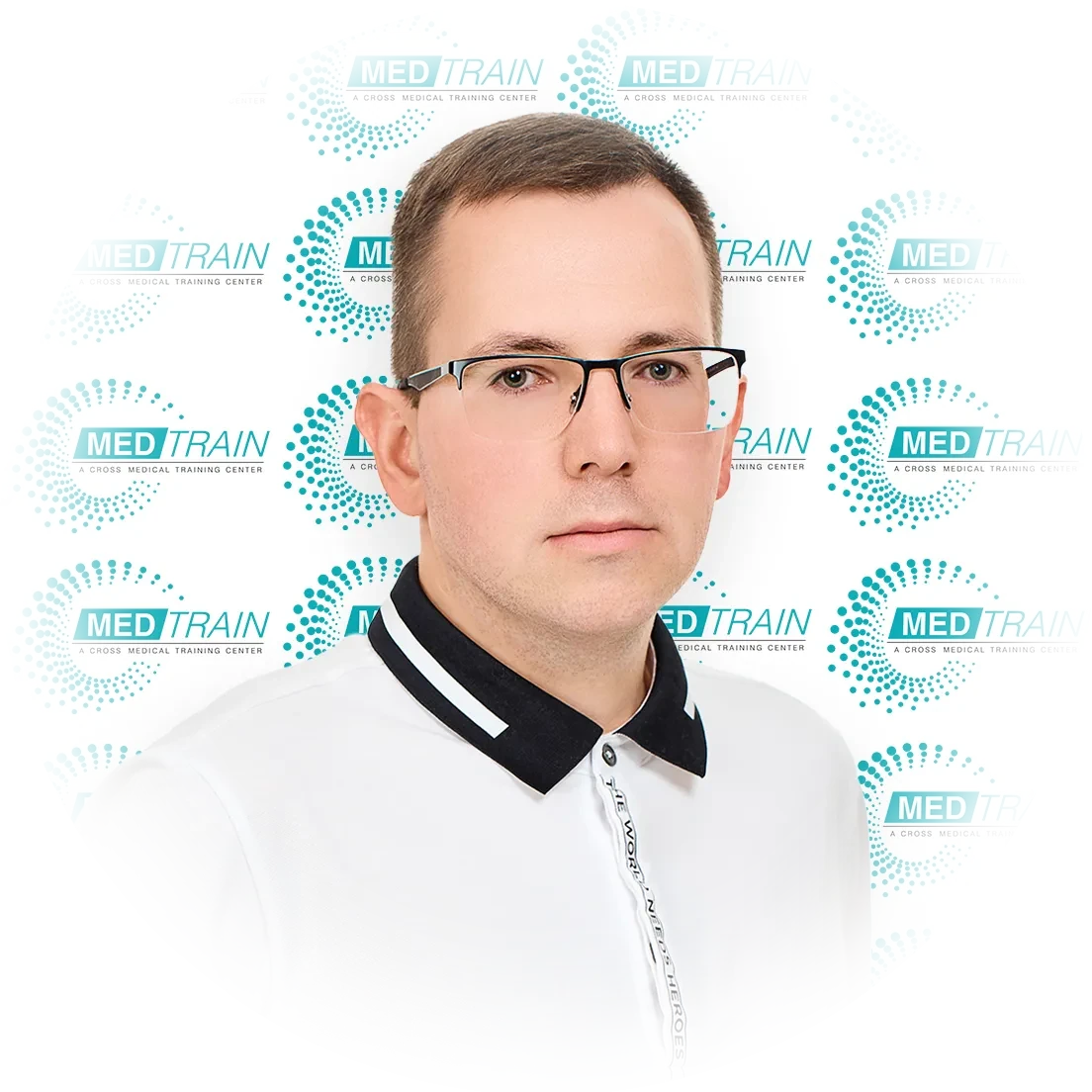
Knyazev Konstantin Andreevich

Leading instructor of the MEDTRAIN Training Center, physician in ultrasound and functional diagnostics

Ultrasound diagnostics physician, Member of the Eurasian Association of Ultrasound and Functional Diagnostics Specialists. Member of the European Federation of Societies for Ultrasound in Medicine and Biology.

Knyazev Konstantin Andreevich is a practising specialist with a foundational clinical background in internal medicine and many years of experience in ultrasound and functional diagnostics. He graduated from the Ural State Medical Academy with a degree in General Medicine (2012), completed an internship in internal medicine (2013), and subsequently underwent professional retraining in Ultrasound Diagnostics and Functional Diagnostics.

Konstantin Andreevich is a member of the Eurasian Association of Specialists in Ultrasound and Functional Diagnostics, as well as a member of the European Federation of Societies for Ultrasound in Medicine and Biology. A leading instructor at the MEDTRAIN Training Centre and chair of the examination board, he has developed and teaches more than 25 educational courses and training cycles devoted to the modern capabilities of ultrasound and functional diagnostics.

Konstantin Andreevich's professional interests include neurosonography, paediatric echocardiography with the diagnosis of congenital heart defects, ultrasound assessment of the lower-limb arteries, and ultrasound monitoring of arterial shunts and endovascular interventions. In his teaching he combines current international guidelines with clinical cases, paying particular attention to practical skills and the safe application of ultrasound techniques in real clinical practice.

Open Instructor Page →

These courses may interest you

Beginner
Musculoskeletal ultrasound16 ч

Introduction to ultrasound diagnosis of the musculoskeletal system

Introduction to musculoskeletal ultrasound: capabilities of the method, basic technique and normal appearance.

Yurkovsky D.S. Learn More
Beginner
Musculoskeletal ultrasound16 ч

Fundamentals of musculoskeletal ultrasound

Fundamentals of musculoskeletal ultrasound: normal anatomy of muscles, tendons, ligaments and joints.

Knyazev K.A. Learn More
Advanced
Musculoskeletal ultrasound48 ч

Ultrasound diagnosis of joints, tissues and bones

Comprehensive ultrasound diagnosis of joints, soft tissues and bones — from normal to pathology.

Yurkovsky D.S. Learn More
Спросить Alex Отвечу на любой вопрос · 24/7 · на любом языке