Rehabilitation after myocardial infarction and coronary artery bypass grafting at the outpatient stage — training, 48 h | МЕДТРЕЙН Asia
Cardiology · Advanced

Rehabilitation after myocardial infarction and coronary artery bypass grafting at the outpatient stage

Outpatient rehabilitation after infarction and bypass surgery: ready-made management protocols that reduce the risk of recurrent events and return the patient to normal life.

48academic hours
Advancedlevel
Distance learningmode of study

Course curriculum

  • Module 1. Organization of follow-up of patients after myocardial infarction and coronary artery bypass grafting
  • History of cardiac rehabilitation: what has changed over recent decades and why it matters
  • Modern rehabilitation models: inpatient, outpatient and remote stages
  • Patient routing: how to properly organize the pathway from inpatient to outpatient care?
  • Rehabilitation potential: what is it and how to assess it for planning rehabilitation?
  • Multidisciplinary team: why do a dietitian, psychologist and nurse participate in rehabilitation?
  • Module 2. Inpatient stage of cardiac rehabilitation: phases I and II
  • Preparation for Coronary Artery Bypass Surgery: How Does Prehabilitation Improve Treatment Outcomes?
  • Early postoperative period: why is this a key stage for successful recovery?
  • Severity of the patient's condition: how to correctly apply the GRACE, TIMI and Killip indices in practice?
  • Complications of myocardial infarction: what you need to know about acute and late consequences?
  • Postpericardiotomy syndrome: the most common errors in diagnosis and treatment
  • Module 3. Outpatient stage of cardiac rehabilitation
  • Dispensary follow-up: how often should the patient be examined and what does the examination plan include?
  • Prevention targets: how to achieve ideal LDL-C, BP, and HbA1c values?
  • Diet therapy: why is nutrition management the key to success?
  • Physical activity: which exercises really work, and which can be harmful?
  • Psychological support: how to recognize depression in time and help the patient?
  • Module 4. Physical rehabilitation after myocardial infarction and coronary artery bypass grafting
  • How to plan physical activity correctly: stages, principles, and common mistakes
  • Assessment of patient performance capacity: what do cardiopulmonary exercise testing (CPET) and the 6-minute walk test reveal?
  • Load monitoring: the Borg scale and HRR
  • Prevention of sternal dehiscence: modern methods for safe recovery
  • Sexual activity after surgery: recovery and patient recommendations
  • Module 5. Work capacity assessment
  • How to determine temporary and permanent disability: timeframes and criteria
  • Disability groups: what does a physician need to know for referral to medical and social expertise (MSE)?
  • Approaches to Rehabilitation of Patients with Loss of Work Capacity
  • Module 6. Organization of health schools and sanatorium-resort treatment
  • Health schools: number, duration and a sample lesson plan
  • Sanatorium and spa treatment: indications and contraindications
  • Individual rehabilitation programs: what to include for the best possible outcome?
  • Module 7. Complications of myocardial infarction and surgery at the outpatient stage
  • Arrhythmias, heart failure, thromboembolism: how to detect and treat them in time?
  • Postpericardiotomy syndrome: why is it so often missed?
  • Module 8. Individual rehabilitation programs and case analysis
  • Functional tests: how to interpret them to develop a personalized plan?
  • Rehabilitation programs: how to adapt standard approaches to the individual characteristics of the patient?
  • Clinical cases: learning from examples to avoid mistakes in our own practice

After a cardiac surgery patient is discharged, questions about physical activity, medications, and monitoring often remain without a clear answer. The course provides a structured protocol of outpatient cardiac rehabilitation — from dosing physical activity to evidence-based secondary prevention.

You will confidently support the patient at every stage of recovery and systematically reduce the risk of recurrent cardiovascular events, rather than reacting to complications after the fact.

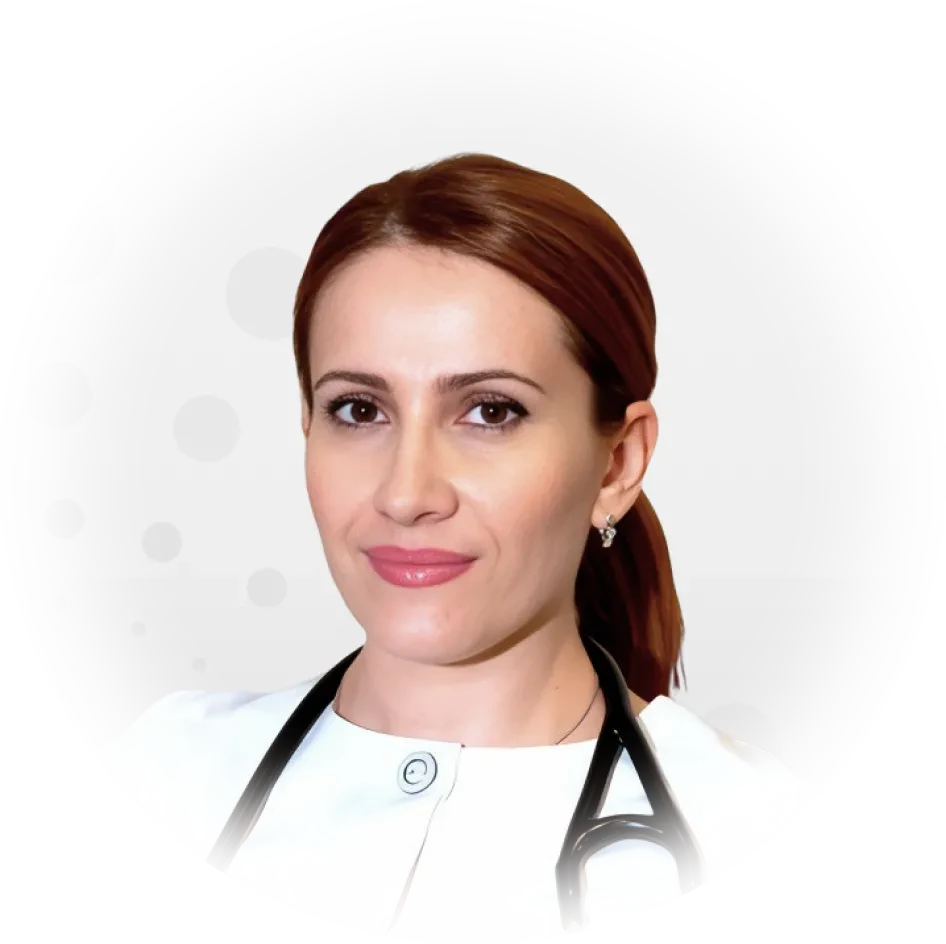
Ayrapetyan Lidia Arturovna

Cardiologist, Candidate of Medical Sciences

Cardiologist and Candidate of Medical Sciences with original research on the hemostatic system and connective tissue dysplasia. Learners will benefit from the combination of clinical specialization in cardiology with research experience and publications.

Cardiologist, Candidate of Medical Sciences. Author of 16 scientific works, including 3 articles in journals from the HAC list.

Education

  • 2008–2014 — Stavropol State Medical University of the Ministry of Health of the Russian Federation, specialty "General Medicine" (diploma with honors)
  • 2014–2015 — internship in "Internal Medicine", Stavropol State Medical University of the Ministry of Health of the Russian Federation
  • 2015–2017 — residency in "Cardiology", Stavropol State Medical University of the Ministry of Health of the Russian Federation
  • 2016–2023 — doctoral candidacy in "Internal Diseases" at the Department of Hospital Therapy of Stavropol State Medical University of the Ministry of Health of the Russian Federation

Academic degree

  • 2023 — awarded the academic degree of Candidate of Medical Sciences; dissertation "Clinical and diagnostic significance of polymorphisms of certain genes of the hemostasis system in connective tissue dysplasia" (specialty 3.1.18 — internal diseases)

Continuing education

  • 2021 — "Cardiology. Current issues", Academy of Business Education CPE
  • 2022 — "Cardiology", Siberian Institute of Continuing Medical Education ANO CPE
  • 2023 — "Cardiology", Moscow Academy of Professional Education LLC
  • 2023 — "Arterial hypertension: current issues of prevention, diagnosis and treatment", DOCSTARCLAB LLC

Open Instructor Page →

These courses may interest you

Advanced
Cardiology144 ч

Clinical cardiology

Systematic update of knowledge on the key areas of clinical cardiology for confident bedside decisions.

Isaeva A.V. Learn More
Advanced
Cardiology18 ч

Inflammatory heart diseases in the cardiologist's practice

Myocarditis, pericarditis, and endocarditis: how not to miss cardiac inflammation and how to build a management strategy based on current clinical approaches.

Davydova A.V. Learn More
Advanced
Cardiology48 ч

Rehabilitation after myocardial infarction and coronary artery bypass grafting at the outpatient stage

Outpatient rehabilitation after infarction and bypass surgery: ready-made management protocols that reduce the risk of recurrent events and return the patient to normal life.

Ayrapetyan L.A. Learn More
Спросить Alex Отвечу на любой вопрос · 24/7 · на любом языке