
Principles of diagnosis and treatment of rheumatic diseases in the practice of a general physician — training, 144 h | МЕДТРЕЙН Asia
Internal Medicine · Advanced

Principles of diagnosis and treatment of rheumatic diseases in the practice of a general physician

Not missing a rheumatic disease at a therapeutic appointment: principles of early diagnosis and therapy for the general practitioner.

144academic hours
Advancedlevel
Distance learningmode of study

Course curriculum

  • Patient with joint pain. Assessment of complaints and history
  • Patient management pathways (Basic concepts, the pathway of a patient with joint pain)
  • Assessment of complaints. Pain syndrome (Septic arthritis, "Mechanical" type of pain, "Inflammatory" type of pain, inflammatory and mechanical pain)
  • Osteoarthritis in the practice of an internist
  • Definition and key features of osteoarthritis (Diagnostic criteria for osteoarthritis, classification, functional impairment, examples of diagnosis formulation)
  • Diagnosis of osteoarthritis ("Mechanical" type of pain, laboratory diagnostics, instrumental diagnostics, indications for MRI)
  • Treatment of osteoarthritis (Treatment algorithm for a patient with OA, non-pharmacological methods, drug therapy, SYSADOA, topical therapy of osteoarthritis)
  • Hyperuricemia and gout in the practice of an internist
  • Definition of hyperuricemia and gout (Sites of possible onset of gouty arthritis, hyperuricemia and the cardiovascular system)
  • Diagnostic criteria (ACR/EULAR 2015 diagnostic criteria)
  • Initial examination (Acute gouty attack, radiography)
  • Follow-up monitoring (Target organ damage, monitoring the efficacy and safety of urate-lowering therapy)
  • Treatment of gout and hyperuricemia (Relief of a gout attack, management algorithm for patients with HU, allopurinol and kidney pathology, uricosuric drug group, additional methods, dietary recommendations)
  • Rheumatoid arthritis in the practice of a therapist
  • Rheumatoid arthritis – definition and key features (Predisposing factors for RA development, the main link of pathogenesis)
  • Diagnostic criteria (ACR/EULAR 2010 criteria)
  • Initial examination and diagnosis formulation (Main clinical symptoms, «transverse compression» test, additional examination methods, diagnosis formulation, examination during therapy, densitometry in RA)
  • Treatment (Disease-modifying anti-inflammatory drugs, methotrexate, basic therapy and pregnancy, genetically engineered biological agents, Janus kinase inhibitors)
  • Psoriatic arthritis in the practice of a therapist
  • Psoriatic arthritis – definition and key features of the disease (Pathogenesis, features of the joint syndrome, clinical forms, skin involvement in PsA, diagnostic criteria)
  • Treatment (NSAIDs in PsA, disease-modifying anti-inflammatory drugs)
  • Reactive arthritis in the practice of a therapist
  • Definition and main features of reactive arthritis (Concepts and definitions, main pathogens, fundamentals of ReA pathogenesis, clinical manifestations, extra-articular manifestations)
  • Diagnosis of reactive arthritis (Diagnostic criteria, infection diagnosis, instrumental diagnosis)
  • Treatment of reactive arthritis (Antibiotic therapy, relief of joint syndrome, physiotherapy)
  • Axial spondyloarthritis in the practice of the internist
  • Definition and key features (Spondyloarthritis group, ankylosing spondylitis, modified New York criteria, functional tests, Rg stages of sacroiliitis)
  • Diagnosis formulation and use of activity indices (Clinical classification, diagnosis formulation examples, activity index)
  • Treatment (Non-pharmacological methods, NSAIDs, anti-inflammatory drugs)
  • Systemic lupus erythematosus and antiphospholipid syndrome in the practice of an internist
  • SLE and APS – establishing the diagnosis (Concepts and definitions, epidemiology, causes of the disease, pathogenesis, general symptoms, diagnostic algorithms)
  • SLE and APS – principles of therapy (Recommendations of the European League Against Rheumatism, treatment of lupus nephritis)
  • Progressive systemic sclerosis in the practice of an internist
  • Progressive systemic sclerosis – establishing the diagnosis (Definition, Raynaud's syndrome, skin involvement, articular syndrome, organ involvement, Laboratory diagnostics, pulmonary function testing, ACR/EULAR 2013 criteria)
  • Progressive systemic sclerosis – treatment (Main drug groups, Raynaud's syndrome and digital ulcers, skin involvement, interstitial lung disease)
  • Sjögren's syndrome in the practice of an internist
  • Sjögren's syndrome – establishing the diagnosis (Concepts and definitions, prevalence of Sjögren's syndrome, causes, pathogenesis, gastrointestinal involvement, diagnostic criteria, laboratory diagnosis, diagnostic criteria for Sjögren's disease)
  • Sjögren's syndrome – treatment (Non-pharmacological methods, treatment of sicca syndrome, treatment of gastrointestinal involvement)
  • Osteoporosis in the practice of an internist
  • Osteoporosis – key features (Concepts and definition, etiopathogenesis, primary and secondary osteoporosis)
  • Osteoporosis – diagnostics (Fracture risk assessment, indications for DXA densitometry, FRAX calculator, evaluation of osteoporosis progression dynamics, laboratory parameters)
  • Osteoporosis – treatment (Main principles of treatment, set of therapeutic measures, physical activity)
  • Assessment of additional examination methods in rheumatology
  • Instrumental diagnostics
  • Selection of Analgesic Therapy for a Patient with Articular Syndrome
  • General principles
  • Treatment depending on the patient's «profile»

Joint syndrome, morning stiffness, and unclear systemic complaints often first reach the general practitioner, and the further prognosis depends on timely recognition. The course establishes clear principles for diagnosing rheumatic diseases and approaches to therapy in accordance with current clinical guidelines.

You will learn to interpret key laboratory markers, formulate a diagnostic hypothesis, and determine the moment of referral to a rheumatologist. As a result, you will more confidently identify rheumatic pathology at an early stage and competently manage such patients at the level of a general practitioner.

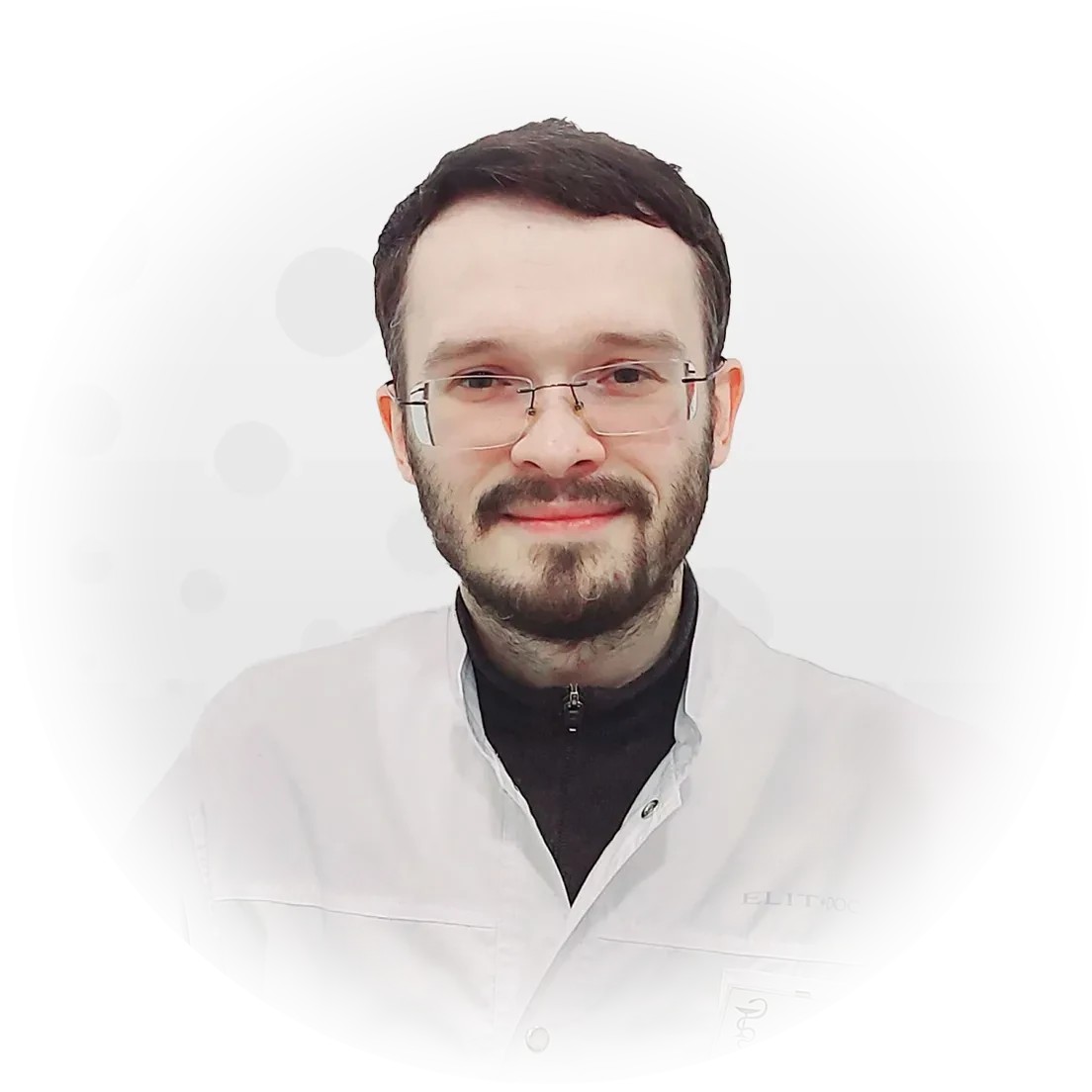
Nefedov Grigory Alekseyevich

Rheumatologist, ultrasound diagnostics physician, therapist, functional diagnostician

Grigory Alekseevich Nefedov is a rheumatologist who combines therapy with ultrasound and functional diagnostics. The combination of clinical and diagnostic training enables him to discuss with participants the practical aspects of detecting and managing rheumatological pathology in detail.

Rheumatologist, ultrasound diagnostics physician, internist, functional diagnostician. Work experience — 7 years.

Education

  • 2016 — Ulyanovsk State University, "General Medicine" specialty (basic education)
  • 2018 — residency in internal medicine, Ulyanovsk State University
  • 2019 — professional retraining in "Ultrasound Diagnostics", Ulyanovsk State University
  • 2019 — professional retraining in "Rheumatology", Interdisciplinary Institute of State Attestation
  • 2019 — professional retraining in "Functional Diagnostics", Kazan State Medical Academy

Professional development

  • 2020 — "Current Issues in the Diagnosis, Treatment, and Prevention of the Novel Coronavirus Infection COVID-19", Ulyanovsk State University

Open Instructor Page →

These courses may interest you

Advanced
Internal Medicine24 ч

The ideal appointment system: how to improve treatment adherence and patient retention

Turn one-off visits into systematic work: learn to structure the appointment so that patients follow prescriptions and return.

Shabanova T.N. Learn More
Advanced
Internal Medicine36 ч

Post-traumatic stress disorder: a comprehensive approach to diagnosis, treatment and interaction with patients

Confidently recognize and support patients with PTSD: modern diagnosis, therapy, and effective communication in one course.

Kiselev V.R. Learn More
Advanced
Internal Medicine36 ч

Diagnosis and treatment of lower extremity venous diseases

From the first examination to choosing tactics: a systematic analysis of the diagnosis and treatment of lower limb venous pathology in physician practice.

Lunkashu E.Y. Learn More
Спросить Alex Отвечу на любой вопрос · 24/7 · на любом языке