
Electroencephalography mastery: modern approaches to analysis and interpretation — training, 48 h | МЕДТРЕЙН Asia
Functional Diagnostics · Advanced

Electroencephalography mastery: modern approaches to analysis and interpretation

EEG mastery: modern approaches to electroencephalogram analysis — from artifacts to epileptiform activity.
48academic hours
Advancedlevel
Distance learningmode of study

Course curriculum

  • Fundamentals of electroencephalography: theory, methodology and application
  • General information about the method. Brain electrophysiology
  • Indications for the examination and limitations of the method
  • Electrode placement technique
  • EEG device setup and technical conditions
  • Safety. Consolidation of the material
  • Polarity, leads, and montages
  • Principles of localizing the focus on EEG
  • The problem of the active referent
  • Alpha activity and Alpha rhythm
  • Beta, Theta, Delta rhythms
  • Electroencephalography across different age periods: from newborns to adults
  • Parameters for recording pediatric EEG
  • Brain maturation and EEG of newborns
  • EEG of infancy and childhood
  • Normal adult EEG
  • EEG interpretation: step-by-step analysis and clinical significance of EEG
  • Principles of step-by-step EEG interpretation
  • Assessment of the background electrical activity of the brain
  • Assessment of foreground activity
  • External (non-physiological) artifacts
  • Internal (physiological) artifacts
  • Normal EEG variants – Sharp variants
  • Normal EEG variants – Rhythmic variants
  • Normal EEG variants – Posterior variants
  • Pathological EEG patterns: diagnosis and clinical correlation
  • Sporadic EEG abnormalities – Spikes and sharp waves. Focal discharges
  • Generalized discharges
  • Slow waves
  • Recurrent Abnormalities. Rhythmic Patterns
  • Recurrent Abnormalities. Periodic Patterns
  • Ictal patterns. Plus a term
  • Electroencephalographic seizure
  • Activation procedures. Hyperventilation
  • Photostimulation. Artifactual reactions
  • Epilepsy and epileptic syndromes: electroencephalographic features
  • Imitations of epileptic seizures
  • Seizures with focal onset (epileptic seizures)
  • Seizures with generalized onset
  • Neonatal seizures
  • Epilepsy
  • Neonatal and infantile epileptic syndromes (electroclinical syndromes)
  • Childhood epileptic syndromes (electroclinical syndromes)
  • Adolescent and Adult Epileptic Syndromes (Electroclinical Syndromes)
  • Electroencephalography in critical conditions: from structural lesions to brain death
  • Structural lesions and focal dysfunction
  • Global dysfunction (Encephalopathy)
  • Classical EEG manifestations of encephalopathy
  • Status epilepticus
  • Rare forms of status epilepticus
  • Condition after cardiac arrest
  • Brain death
  • Drafting an EEG report: structure, interpretation and recommendations

An advanced course on electroencephalography. You will master the systematic analysis of EEG, learn to distinguish the norm and artifacts from pathology, and confidently describe epileptiform activity.

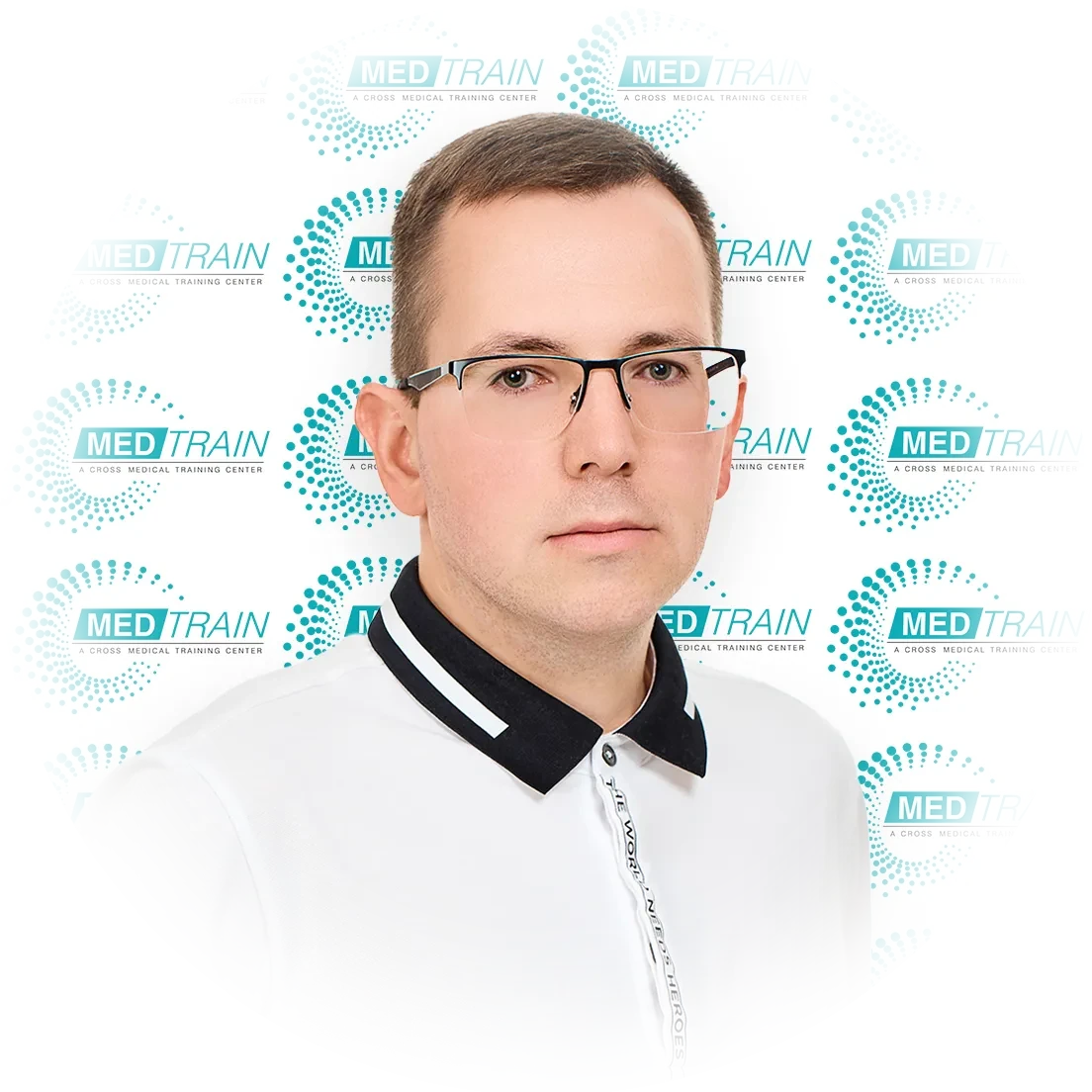
Knyazev Konstantin Andreevich

Leading instructor of the MEDTRAIN Training Center, physician in ultrasound and functional diagnostics

Ultrasound diagnostics physician, Member of the Eurasian Association of Ultrasound and Functional Diagnostics Specialists. Member of the European Federation of Societies for Ultrasound in Medicine and Biology.

Knyazev Konstantin Andreevich is a practising specialist with a foundational clinical background in internal medicine and many years of experience in ultrasound and functional diagnostics. He graduated from the Ural State Medical Academy with a degree in General Medicine (2012), completed an internship in internal medicine (2013), and subsequently underwent professional retraining in Ultrasound Diagnostics and Functional Diagnostics.

Konstantin Andreevich is a member of the Eurasian Association of Specialists in Ultrasound and Functional Diagnostics, as well as a member of the European Federation of Societies for Ultrasound in Medicine and Biology. A leading instructor at the MEDTRAIN Training Centre and chair of the examination board, he has developed and teaches more than 25 educational courses and training cycles devoted to the modern capabilities of ultrasound and functional diagnostics.

Konstantin Andreevich's professional interests include neurosonography, paediatric echocardiography with the diagnosis of congenital heart defects, ultrasound assessment of the lower-limb arteries, and ultrasound monitoring of arterial shunts and endovascular interventions. In his teaching he combines current international guidelines with clinical cases, paying particular attention to practical skills and the safe application of ultrasound techniques in real clinical practice.

Open Instructor Page →

These courses may interest you

Advanced
Functional Diagnostics48 ч

Electroencephalography mastery: modern approaches to analysis and interpretation

EEG mastery: modern approaches to electroencephalogram analysis — from artifacts to epileptiform activity.

Knyazev K.A. Learn More
Advanced
Functional Diagnostics144 ч

Functional diagnostics in practice: examination of the cardiovascular, respiratory, and nervous systems

Functional diagnostics of the cardiovascular system: a large practical course.

Knyazev K.A. Learn More
Beginner
Functional Diagnostics18 ч

Fundamentals of spirometry: data interpretation, diagnosis of external respiratory function disorders

Fundamentals of spirometry: technique, interpretation and diagnosis of ventilation disorders.

Knyazev K.A. Learn More
Спросить Alex Отвечу на любой вопрос · 24/7 · на любом языке