
Fundamentals of spirometry: data interpretation, diagnosis of external respiratory function disorders — training, 18 h | МЕДТРЕЙН Asia
Functional Diagnostics · Beginner

Fundamentals of spirometry: data interpretation, diagnosis of external respiratory function disorders

Fundamentals of spirometry: technique, interpretation and diagnosis of ventilation disorders.

18academic hours
Beginnerlevel
Distance learningmode of study

Course curriculum

  • Analysis of indications and contraindications for spirometry. Technical conditions: equipment requirements, sanitary and epidemiological regime, equipment verification and calibration
  • The concept of spirometry
  • Main applications of spirometry
  • Indications for spirometry: diagnosis, monitoring, expert evaluation, public health
  • Absolute and relative contraindications to performing spirometry
  • Technical conditions: equipment requirements, sanitary-epidemiological regime, equipment inspection and calibration. Measurement conditions and calibration
  • The concept of calibration
  • Biological control as an additional stage to ensure measurement quality
  • Filling out the registration log
  • Physiology of the lungs. The concept of volumes and flows. Step-by-step methodology of performing spirography
  • Physiology of the lungs
  • Tidal volume
  • Inspiratory reserve
  • Residual volume
  • Inspiratory capacity
  • Functional residual capacity of the lungs
  • Vital capacity of the lungs
  • Total lung capacity
  • Preparation of Equipment and Patient
  • Patient data. Patient positioning
  • Discontinuation of medications
  • Spirometry procedure technique
  • Expiratory reserve volume
  • Forced vital capacity of the lungs
  • Vital capacity of the lungs measured during forced inspiration
  • Forced expiratory volume in the first second
  • Peak expiratory flow rate
  • Assessment of spirogram quality and identification of artifacts. Bronchodilator test
  • Artifacts and quality criteria
  • Cough artifact
  • Insufficient expiratory effort artifact ("non-blowing")
  • "Slow start" artifact
  • "Stop-inspiration" artifact
  • "Early termination of expiration" artifact
  • Back-extrapolation volume
  • Bronchodilation test
  • Indications and contraindications for the bronchodilator test
  • Response to a bronchodilator
  • Features of spirography in children and elderly patients. Additional tests in spirography: exercise test, methacholine test
  • Features of spirography in children and elderly patients
  • Methacholine test and exercise challenge test
  • Comprehensive approach to interpretation. Dysanapsis and nonspecific patterns in the interpretation of spirography results
  • Interpretation
  • ERS/ATS, NICE, Comprehensive Guide to Pulmonary Function Tests, Iowa head and neck protocol, ESR and national recommendations
  • Assessment of the severity of lung function impairment
  • Diagnostic criteria for obstructive ventilation disorders
  • Restrictive type of ventilation impairment
  • Mixed type of pulmonary ventilation function disorders
  • Assessment of the bronchodilator test result
  • Dysanapsis and other patterns of FEV1, FVC and FEV1/FVC impairment
  • The «nonspecific» pattern: low FEV1 and FVC with a normal FEV1/FVC ratio
  • Non-specific pattern at maximal effort
  • Nonspecific pattern with insufficient effort
  • Analysis of recorded spirogram cases. Decision-making algorithms

A basic course on spirometry. You will master the correct examination technique, interpretation of measurements, and the diagnosis of obstructive and restrictive disorders.

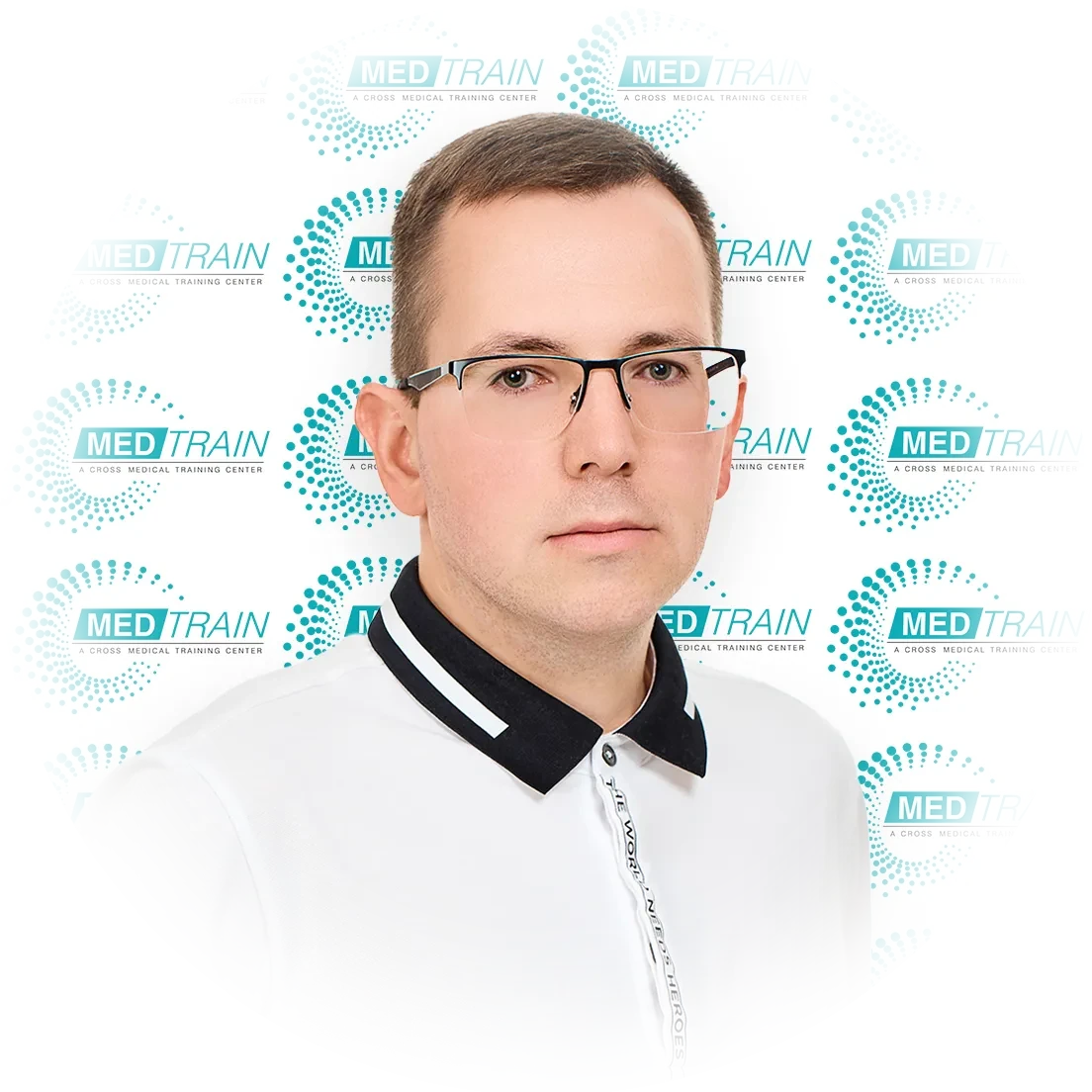
Knyazev Konstantin Andreevich

Leading instructor of the MEDTRAIN Training Center, physician in ultrasound and functional diagnostics

Ultrasound diagnostics physician, Member of the Eurasian Association of Ultrasound and Functional Diagnostics Specialists. Member of the European Federation of Societies for Ultrasound in Medicine and Biology.

Knyazev Konstantin Andreevich is a practising specialist with a foundational clinical background in internal medicine and many years of experience in ultrasound and functional diagnostics. He graduated from the Ural State Medical Academy with a degree in General Medicine (2012), completed an internship in internal medicine (2013), and subsequently underwent professional retraining in Ultrasound Diagnostics and Functional Diagnostics.

Konstantin Andreevich is a member of the Eurasian Association of Specialists in Ultrasound and Functional Diagnostics, as well as a member of the European Federation of Societies for Ultrasound in Medicine and Biology. A leading instructor at the MEDTRAIN Training Centre and chair of the examination board, he has developed and teaches more than 25 educational courses and training cycles devoted to the modern capabilities of ultrasound and functional diagnostics.

Konstantin Andreevich's professional interests include neurosonography, paediatric echocardiography with the diagnosis of congenital heart defects, ultrasound assessment of the lower-limb arteries, and ultrasound monitoring of arterial shunts and endovascular interventions. In his teaching he combines current international guidelines with clinical cases, paying particular attention to practical skills and the safe application of ultrasound techniques in real clinical practice.

Open Instructor Page →

These courses may interest you

Advanced
Functional Diagnostics48 ч

Electroencephalography mastery: modern approaches to analysis and interpretation

EEG mastery: modern approaches to electroencephalogram analysis — from artifacts to epileptiform activity.
Knyazev K.A. Learn More
Advanced
Functional Diagnostics144 ч

Functional diagnostics in practice: examination of the cardiovascular, respiratory, and nervous systems

Functional diagnostics of the cardiovascular system: a large practical course.

Knyazev K.A. Learn More
Beginner
Functional Diagnostics18 ч

Fundamentals of spirometry: data interpretation, diagnosis of external respiratory function disorders

Fundamentals of spirometry: technique, interpretation and diagnosis of ventilation disorders.

Knyazev K.A. Learn More
Спросить Alex Отвечу на любой вопрос · 24/7 · на любом языке