
A systematic approach to interpreting electrocardiograms — training, 96 h | МЕДТРЕЙН Asia
Functional Diagnostics · Advanced

A systematic approach to interpreting electrocardiograms

A systematic approach to ECG interpretation: confident reading of the electrocardiogram by algorithm.

96academic hours
Advancedlevel
Distance learningmode of study

Course curriculum

  • Fundamental basics of ECG recording, description, and interpretation o The concept of cell electrophysiology and membrane potentials o Stimulation, excitation, and impulse transmission o Depolarization and repolarization o Myocardial cells and pacemaker cells, division of labor in the heart muscle o The place of ECG in patient examination and when it is necessary o Leads as a view of the heart o The principle of the 12-lead ECG model o Diagram of the heart's conduction system o Cardiac rhythm and the formation of electrical impulses in the heart's conduction system o Patterns of the ECG complex and its components: waves, intervals, and segments o ECG paper, paper speed, and grid scale o Determining the heart rate o Calibration of the ECG recorder o Formation of the heart's electrical picture on the ECG o The shape of the QRS complex, the electrical axis, the summary electrical vector, and why to care about them o The role of the J point o The transition point and its clinical meaning o Rhythmogram o Electrode placement errors o Artifacts in ECG recording and how to deal with them o Basics of ECG interpretation o ECG description technique o Additional leads
  • ECG diagnostics of cardiac conduction disorders o Pacemaker activity of the heart. Impulse propagation time and delay o Heart blocks (atrioventricular blocks) o Right and left bundle branch block of the His bundle o Clinical significance of cardiac conduction system pathology
  • ECG assessment of cardiac rhythm o Principles of rhythm analysis o Hierarchy of pacemakers o Activation of atrial, AV-nodal and ventricular pacemakers – escape rhythms o Supraventricular, nodal, ventricular rhythms o Sinus arrhythmia o Bradycardias, tachycardias, extrasystoles, fibrillation and flutter o Role of carotid sinus massage in diagnosing rhythm disturbances o Wolff-Parkinson-White syndrome (WPW) and re-entry tachycardias o Clinical significance of detecting an abnormal rhythm
  • ECG patterns in pathology – screening for chamber enlargement, P-wave, QRS complex and T-wave patterns. Acute coronary syndrome, STEMI, NSTEMI, dynamics of ischemia development o Enlargement (hypertrophy) of the right and left atrium o Hypertrophy of the right and left ventricle o Biventricular hypertrophy o Voltage and scoring diagnostic criteria o Pulmonary artery thromboembolism o Diagnostic features of Q waves o Concept of the electrical window o Abnormalities of the ST segment and T waves o ST segment elevation o Variants of upsloping, horizontal and downsloping ST segment depression o STEMI and NSTEMI infarction o ECG changes during digoxin therapy o deWinter waves o Biphasic waves o Hour-by-hour dynamics of myocardial infarction signs o Wellens syndrome o ECG patterns of ischemia development over time: subendocardial ischemia, subepicardial ischemia, myocardial injury, myocardial necrosis o Advanced topographic diagnosis of ischemia, the Bayes De Luna system o Electrolyte disturbances o «Nonspecific» ST segment changes o QT interval abnormalities o Short and long QT syndromes o QT in ischemia
  • Specific ECG cases. Examination of an asymptomatic patient o Analysis of ECG variants in normal cardiac rhythm o Differential diagnosis of normal and pathological ECG o Dangerous conditions and their predisposing factors in an asymptomatic patient o ECG variations depending on body constitution o Features of a normal ECG in sports and high physical activity
  • Specific ECG cases. ECG in pain syndrome and dyspnea o Analysis of the ECG in a patient with acute pain syndrome o Acute coronary syndrome o Unstable angina o STEMI and NST-ACS o Ischemic cascade o Analysis of the ECG in a patient with transient pain syndrome o Signs of ischemia after exercise o Analysis of the ECG in a patient with dyspnea o Pulmonary artery thromboembolism and chronic lung diseases o Features of detecting myocardial infarction in patients with left bundle branch block and a pacemaker
  • Specific ECG cases. ECG in syncopal conditions o The concept of palpitations and syncope o The relationship between syncopal conditions and the ECG pattern o Wide-complex tachycardia o Narrow-complex tachycardias o Pre-excitation syndromes: Wolff-Parkinson-White syndrome (WPW), Lown-Ganong-Levine syndrome (LGL), torsade de pointes tachycardia o Sick sinus syndrome o Heart blocks o Intermittent bradycardia o Brugada syndrome o Basic pacing patterns on the ECG o Cardiac arrest, shockable and non-shockable rhythms
  • ECG of elite athletes. Use of ECG in sports medicine. Martinet test o Assessment of sudden cardiac death risk in athletes based on ECG data o Indications for further examination based on international guideline documents o Physiological adaptation to exercise – the normal ECG of the «athlete's heart» o Juvenile ECG pattern o National features of athletes' ECG patterns o Borderline ECG changes in the professional athlete (grey zone). T-associated abnormalities o Q- and ST-associated abnormalities o Bundle branch blocks and nonspecific conduction disturbances in athletes o QT-associated abnormalities o Brugada syndrome in athletes o Bradycardia and AV blocks o Premature contractions o Tachyarrhythmias: sinus, atrial, ventricular tachycardia o Atrial fibrillation and flutter o ECG patterns requiring monitoring o Clinical significance of ECG findings and family history, choosing patient management strategy o 2023 updates o Martinet–Kushelevsky test
  • ECG assessment of pacemaker function: types, modes, and options for monitoring their operation. Pacemaker syndrome o Specifics of terms used in describing pacemaker operation o Structure and operating modes of pacemakers o Biventricular pacing (cardiac resynchronization therapy – CRT) o ECG diagnostics of pacemaker malfunctions o Pacemaker software algorithms o Pacemaker-induced tachycardia o Use of the magnet switch o Myocardial infarction with a functioning pacemaker
  • Use of "home" ECG devices. ECG diagnostics in patients with presyncope and syncope o Portable, wearable, and adhesive devices o Overview of devices on the market, the appropriateness of using different device types in various cardiac pathologies
  • Ambulatory (Holter) monitoring - AECG o The AVSEP system – the basis of modern monitoring systems o Formation of the norm pattern during long-term recording o Methods, technologies and equipment o Holter systems popular in Russia o Electrode placement schemes and lead systems used in AECG Holter monitoring o Recording duration options, their advantages and disadvantages o The patient's role in AECG recording o External and implantable loop recorders o Signal registration, processing and interpretation in AECG o Patient preparation and recording stabilization o Combating artifacts o Indication for Holter monitoring o Assessment of rhythm disturbances: bradyarrhythmias, tachyarrhythmias, SSS o Extrasystole and ventricular tachycardias, WPW o Diagnostic criteria of ischemia in AECG o Prognosis assessment and risk stratification of cardiac death o The cardiologist's view of the Holter monitoring technique – clinical significance of the method o Channelopathies and cardiomyopathies o Specific features of AECG in a patient with end-stage renal failure, neurological and muscular diseases, sleep apnea syndrome o Markers of autonomic nervous system tone and repolarization in ECG Holter monitoring o Heart rate variability o Circadian profile o Frequency analysis o Heart rate turbulence o Clinical efficacy and safety of therapy, assessment of arrhythmias

A comprehensive course on ECG. You will build a systematic interpretation algorithm, learn to recognise arrhythmias, blocks, and ischaemia, and avoid missing threatening changes.

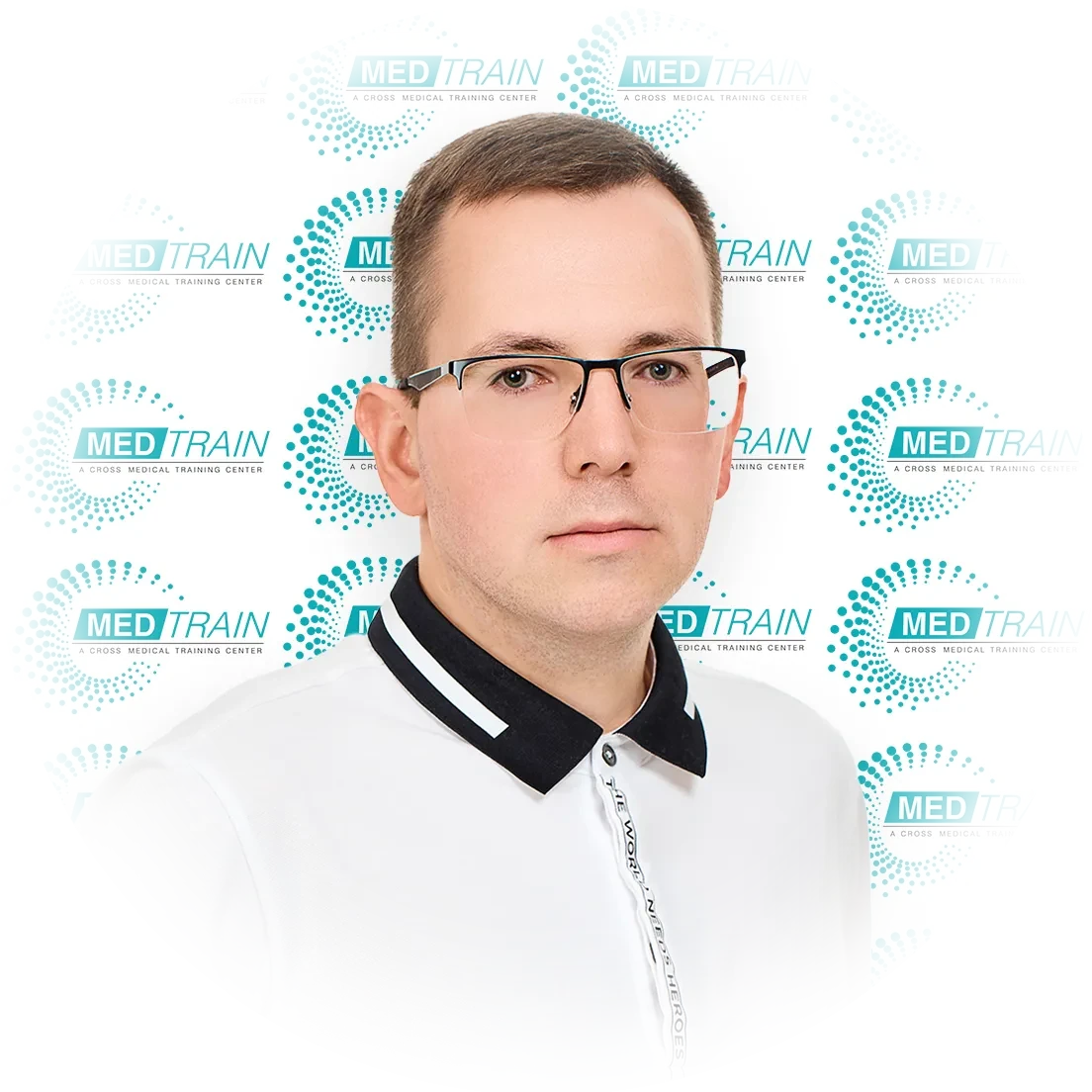
Knyazev Konstantin Andreevich

Leading instructor of the MEDTRAIN Training Center, physician in ultrasound and functional diagnostics

Ultrasound diagnostics physician, Member of the Eurasian Association of Ultrasound and Functional Diagnostics Specialists. Member of the European Federation of Societies for Ultrasound in Medicine and Biology.

Knyazev Konstantin Andreevich is a practising specialist with a foundational clinical background in internal medicine and many years of experience in ultrasound and functional diagnostics. He graduated from the Ural State Medical Academy with a degree in General Medicine (2012), completed an internship in internal medicine (2013), and subsequently underwent professional retraining in Ultrasound Diagnostics and Functional Diagnostics.

Konstantin Andreevich is a member of the Eurasian Association of Specialists in Ultrasound and Functional Diagnostics, as well as a member of the European Federation of Societies for Ultrasound in Medicine and Biology. A leading instructor at the MEDTRAIN Training Centre and chair of the examination board, he has developed and teaches more than 25 educational courses and training cycles devoted to the modern capabilities of ultrasound and functional diagnostics.

Konstantin Andreevich's professional interests include neurosonography, paediatric echocardiography with the diagnosis of congenital heart defects, ultrasound assessment of the lower-limb arteries, and ultrasound monitoring of arterial shunts and endovascular interventions. In his teaching he combines current international guidelines with clinical cases, paying particular attention to practical skills and the safe application of ultrasound techniques in real clinical practice.

Open Instructor Page →

These courses may interest you

Advanced
Functional Diagnostics48 ч

Electroencephalography mastery: modern approaches to analysis and interpretation

EEG mastery: modern approaches to electroencephalogram analysis — from artifacts to epileptiform activity.
Knyazev K.A. Learn More
Advanced
Functional Diagnostics144 ч

Functional diagnostics in practice: examination of the cardiovascular, respiratory, and nervous systems

Functional diagnostics of the cardiovascular system: a large practical course.

Knyazev K.A. Learn More
Beginner
Functional Diagnostics18 ч

Fundamentals of spirometry: data interpretation, diagnosis of external respiratory function disorders

Fundamentals of spirometry: technique, interpretation and diagnosis of ventilation disorders.

Knyazev K.A. Learn More
Спросить Alex Отвечу на любой вопрос · 24/7 · на любом языке